

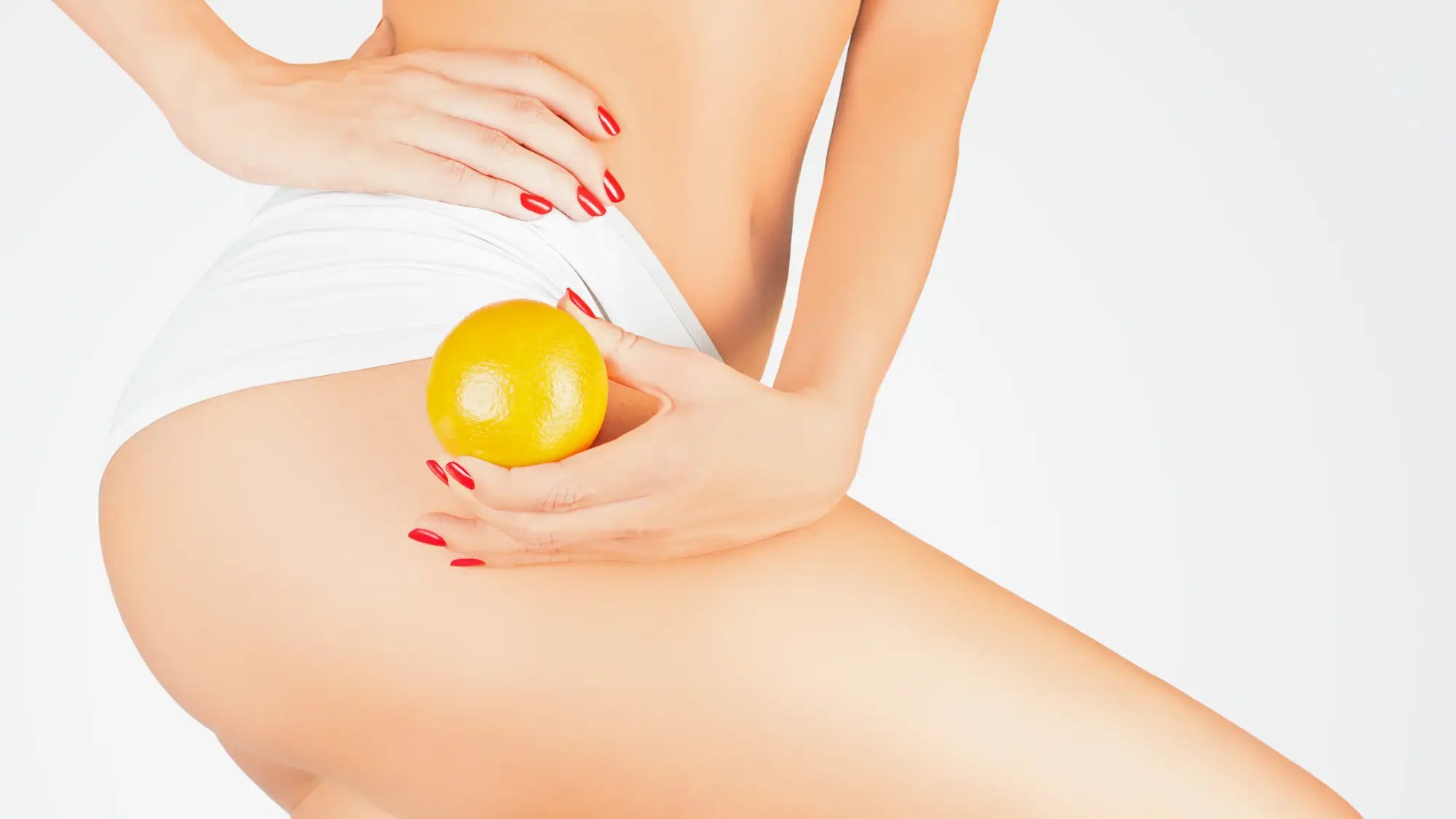
Bitter orange peel
Cellulite. The mere sound of this name immediately triggers one association for women: dimpled, lumpy thighs and buttocks. So different from the ones we wish we had: smooth, firm, like the ones on the covers of glossy magazines. Meanwhile, cellulite is now classified as a lifestyle disease. Statistics show that this problem affects not only an increasing number of women, but, significantly, it affects them at an increasingly early age.
More than 90% of women over the age of 30 experience at least one symptom of lipodystrophy, such as swelling, local microcirculation disorders, irregularities in the structure of adipose tissue, or reduced elasticity of the skin and subcutaneous tissues. The first symptoms of cellulite can appear as early as adolescence and affect about 12% of girls. The percentage of cases increases significantly during pregnancy (an increase of about 20%), which is linked to an increased supply of sex hormones. An increase in cases is also observed in women during or around menopause (nearly 25%).
Orange peel affects about 85% - 98% of women of all races. This means that almost every one of us has it. To a greater or lesser extent, on the thighs, buttocks, or both. Cellulite is as characteristic of our gender as breasts and round hips. It is currently classified as a tertiary sex characteristic. And yet, we don't like it; it is our complex, we are ashamed of it, and we label it as "caused by neglect."
So, it is time to face the truth about cellulite and look at it through the eyes of scientists who have been conducting various studies on this phenomenon for years.
What is cellulite?
We must start by saying that not all cellulite is the same. We can distinguish two types: water cellulite and fat cellulite.
-
Water cellulite is caused by the excessive accumulation of water in the tissues and the formation of edema, and it often affects women with a slim build.
-
Fat cellulite (also known as lipodystrophy) arises as a result of abnormal metabolism of adipose tissue and accumulates in the form of small lumps under the skin. It is easy to recognize - when you pinch a fold of skin, depressions and bulges appear on it.
Fat cellulite can have different levels of severity. Classifying these levels is not a simple matter. In scientific literature (sic!), many ways of classifying this condition are available. The most well-known and most frequently used classification was proposed in 1978 by Nürnberger and Müller, who identified 4 degrees of lipodystrophy:
- Stage 0 - healthy skin, no irregularities when the skin is pinched
- Stage 1 - Skin is smooth both when standing and lying down. Irregularities only become visible when the skin is pinched
- Stage 2 - Skin irregularities become visible only in a standing position; the skin is smooth when lying down
- Stage 3 - Skin irregularities visible both when standing and lying down

Where does it come from?
One of the biggest culprits responsible for the development of cellulite is... our femininity. One of the factors is hormonal imbalance (hyperestrogenism), and above all, an excess of estrogens with a simultaneous deficiency of progesterone. It is not just these hormones that turn against our smooth thighs - insulin, catecholamines (adrenaline and noradrenaline), and thyroid hormones also participate in the formation of cellulite.
Other causes of cellulite include a diet rich in carbohydrates and fats, with a high intake of salt; alcohol consumption, smoking, a sedentary lifestyle, and - watch out - stress. Another factor is pregnancy.
It is immediately obvious that we, as women, are at a disadvantage when it comes to the possibility of avoiding orange peel. It attacks us from every side, and no - it is not the result of neglect or laziness. Cellulite is simply one of the signs of our femininity.
Love it and... fight it!
Let's say it loud and clear - cellulite cannot be effectively removed once and for all. It has been with us, is with us, and will be with us. It is worth taking care of it so that our skin looks as good as possible - then it will also be easier to get used to it, and in time, even to love it :)
- Take care of your diet. It should be wholesome, rich in vegetables and fruits. If you feel like having something unhealthy, allow yourself to do so from time to time, but if you decide to eat fast food, for example, do not wash it down with a sweetened, carbonated drink.
- Increase your water intake and limit your alcohol consumption. Giving up alcohol pays off - your body will thank you for this small gesture, and not just with smoother thighs.
- Sport is healthy. If you don't see yourself on a treadmill at a fitness club, find a physical activity that suits you. It could be walking or working out in the comfort of your own home on a PowerBoard vibration plate. Remember that the key to success is regularity.
- Massage yourself. All folds, lumps, and irregularities need massage to be smoothed out. You can perform the massage manually, using, for example, a spiked roller, or special devices such as the MediGunPRO vibration gun. You can also use special gloves, sponges, or brushes to massage your body while bathing - preferably under the shower.
- Use alternating cold and warm water showers. Such treatments will improve blood circulation and make the skin smoother and firmer.
- Use anti-cellulite preparations. Proper skin hydration is also important. It is best to combine the application of cosmetics with massage; you will then achieve a wonderful synergistic effect.
Once you start following the above guidelines, you will notice an improvement in the condition of your skin in sensitive areas. Then you will surely find that cellulite is not as terrible as it is painted :)
Cellulite through the eyes of scientists
One of the latest scientific publications on cellulite is a review article entitled "Cellulite: Presentation and management" by an international group of dermatologists, which appeared in the April issue of the Journal of Cosmetic Dermatology (J Cosmet Dermatol. 2022;21:1393–1401). Specialists from Germany, Austria, Switzerland, the USA, India, Iran, and Romania discuss the etiology, pathophysiology, and treatment of cellulite. They summarize the current pathophysiological understanding of cellulite, and suggested treatment options include, among others, lifestyle modification, topical preparations that reduce lipogenesis, improve microcirculation, increase synthesis and integrity of the extracellular matrix, and increase lipolysis, oral collagen peptide supplementation, and massage.
We hope that after reading this article, you will look at your cellulite with a kinder eye and, as the beginning of a new common journey, you will try to make friends with it at least a little bit.
Love your real, un-Photoshopped body and take care of it - it is the only, best, and most beautiful body you have.
When writing the article, I used the following publications:
"Cellulite – causes, prevention, treatment" Katarzyna Janda, Anna Tomikowska
COMPUTER-AIDED EVALUATION OF CELLULITE THERAPY EFFECTIVENESS BASED ON THERMOGRAPHIC IMAGING Agnieszka Migasiewicz, Aleksandra Sobańska, Ewelina Dereń, Markus Pelleter, Agnieszka Giemza, Halina Podbielska, Joanna Bauer
Share:
Facial massage - Gua Sha stone massage
Rehabilitation mat for the spine - which one to choose?