

Tight calf muscles are a common ailment that affects many people. What is the reason for this condition?
Let's start with a little anatomy lesson:
"The posterior part of the calf is built from the gastrocnemius muscle, which is classified as a two-headed muscle. Its origin is the popliteal surface of the femur. The heads join in the middle of the lower leg. The insertion is the Achilles tendon, which attaches to the calcaneal tuberosity. Next is the soleus muscle. It is located directly under the gastrocnemius muscle. Its origin is the proximal end of the fibula and tibia, and its termination is also the Achilles tendon. Both muscles are the strongest plantar flexors of the foot. During walking and running, they lift the entire body onto the toes and lift the heel off the ground. The gastrocnemius muscle together with the soleus muscle form the so-called triceps surae muscle. The entire complex of muscles in the posterior part of the lower leg is complemented by the plantaris muscle."*

Phew. It's just one calf, but so many structures inside. Plenty of things to go wrong :)
Why do we have tight calf muscles?
There are many factors that cause calf tension. The first and most obvious is intense physical activity - especially running or jumping. Another is standing for long periods of time, but also prolonged sitting. Tight calf muscles are also a consequence of improperly fitted footwear - especially high heels. Tension and cramps can also be caused by fatigue, deficiencies in magnesium, etc., as well as spinal degeneration and nerve compression.
As you can see, our calves do not like monotony. They need changes in position (like our entire musculoskeletal system), and after physical exertion - stretching and massage.
How to relax calf muscles?
The pain of tight calves is quite unpleasant, so you should count on the fact that the massage won't be a euphoric experience at first either.
However, it is worth doing it properly - this way we will free the calves from tension, stimulate blood and lymph circulation, and restore a feeling of lightness to the entire legs.
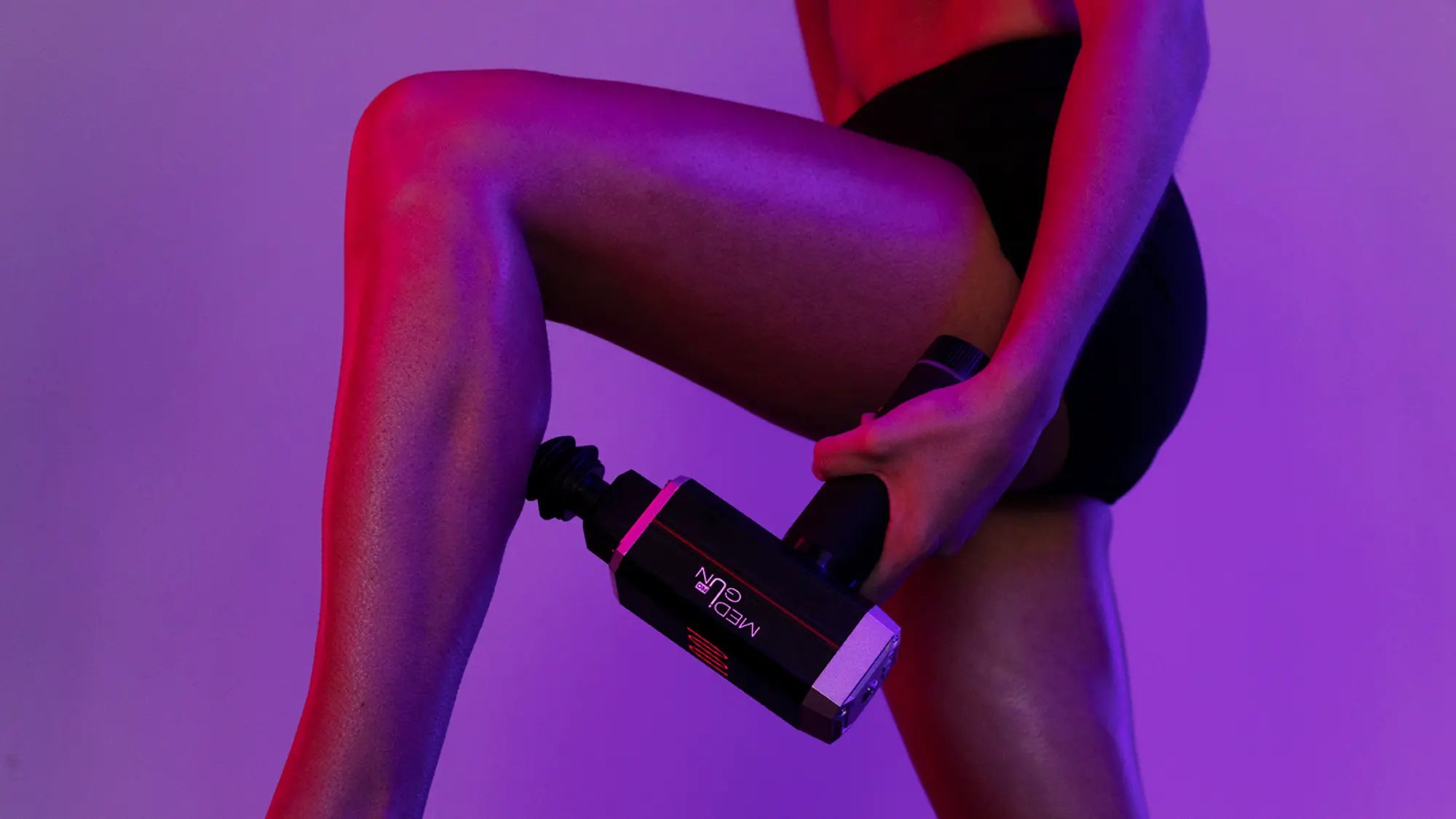
If your calf muscles are tight after physical exertion, the MediGunPRO massage gun will help. The set includes six different tips - including a special "fork" and a foam ball that will help relax tension in both the back and front of the calf.
Ladies in high heels, as well as people who have a standing or sedentary job, will surely love the Canoo V leg and foot massager.
This device performs an intense compression massage of the calves, using an extensive system of compression (pressure) airbags.
Tight muscles will certainly feel the first massages quite intensely, but you will quickly notice that the tension subsides and the calves "get back" to normal - even more so if you turn on the heating option during the massage.
A good idea that makes it easier to relax tight calf muscles is using the Miniwell Twist2Go massage pillow. It will massage the calves with circular motions (Shiatsu technique), combined with intense heating, which accelerates muscle relaxation.
When calf muscles are tight, they can lead to various types of degeneration, such as valgus feet, and consequently to overloads within the ankle joint, knee joints, and the forefoot. They can also cause gait pattern disturbances - in people who have excessive calf muscle tension, the gait will not start from the heel, but the entire foot will land on the ground. You can then see the "slapping" of the entire foot, and in the elderly, even shuffling.
If you cannot cope with tight calf muscles on your own, be sure to go to a physiotherapist or osteopath. Not only will they help you deal with the ailment, but they will also recommend appropriate exercises that will eliminate the problem.
*The calf anatomy description was taken from the swiatrehabilitacji.pl portal
Share:
Stress-free holidays
Ecosonic subjectively - a massage chair review