

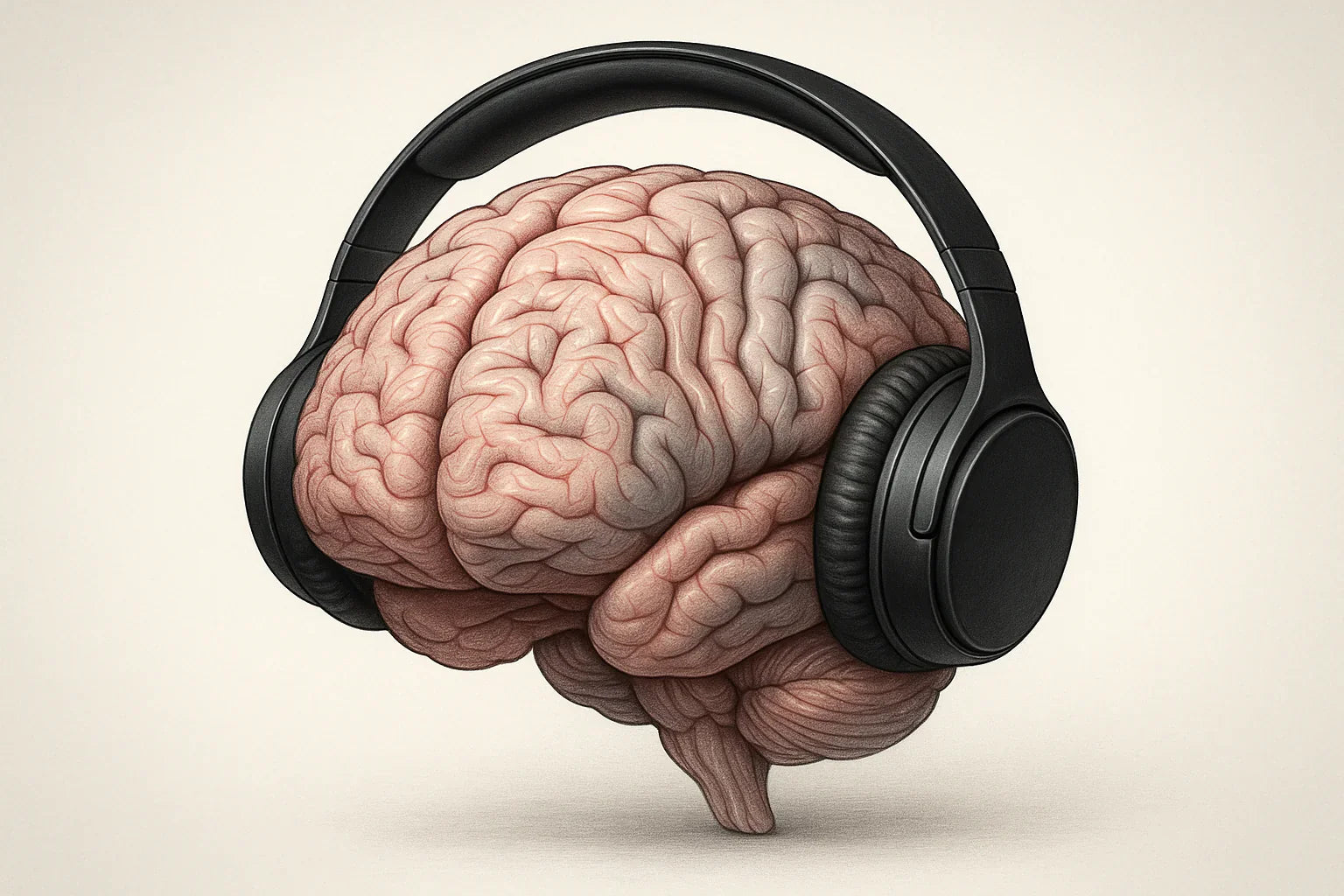
How does music affect the brain?
14 years ago, two professors: Vinod Menon and Daniel Levitin from Stanford University conducted research that revealed which areas of the brain are activated by music. The studies used sounds from classical pieces, such as Wolfgang Amadeus Mozart's "Eine kleine Nachtmusik" and Ludwig van Beethoven's "Für Elise".
To summarize the study's results: music from years past activates neural networks, producing a complex experience of pleasure in the brain, including physical sensations (relaxation), a feeling of joy, and complex experiences related to emotional memory, personality, attitude, and future plans.
Another interesting fact is that cases of musical anhedonia, i.e., the loss of the ability to derive pleasure from music, are extremely rare.
Classical music or contemporary music?
Common knowledge suggests that classical music has greater value than contemporary music. However, if we put aside the aesthetic dimension or the level of compositional complexity and focus solely on the issue of its effect on the brain, it turns out that the genre of music does not matter. The most important thing is that we truly like the music we listen to. Research shows that liked music increases arousal and the mutual exchange of information within structures belonging to the so-called default mode network, which is responsible for integrating and organizing information about oneself, one's own situation, and past, current, and future experiences.
Activity within this network is likely also linked to creativity. It is worth citing a certain "creativity" study: study participants performed tasks requiring divergent thinking (which involves coming up with many solutions by combining and transforming information, and perceiving connections between distant elements) or convergent thinking (searching for one best solution to a problem). While doing so, they listened to classical music that evoked various emotional states (joy, sadness, anxiety, calm) or were in silence.
It turned out that people who listened to happy music (Vivaldi's "Spring") achieved better results in divergent thinking than those who were in silence. No effect of music on convergent thinking was found. So, if we need a surge of creative inspiration, let's listen to happy, stimulating tracks.
In people listening to music they like, researchers noticed specific activity in the hippocampus area, the structure responsible for episodic memory - including emotional memory. Research conducted so far shows that music helps in the therapy of neurodegenerative diseases - especially progressive and advanced dementias, such as Alzheimer's disease. It helps patients in the process of restoring memories.
Music therapy
Now that you know how music affects our brain, music therapy stops being dark magic and becomes an understandable form of therapy. You also know why it is particularly helpful for people suffering from terminal illnesses, dementia, autism, or mental health problems.
When you sit down on your massage chair this evening or when you use your massager - be sure to turn on some music. Whether it's Mozart or Patrycja Markowska? It doesn't matter. What matters is that it is your music.
***This post is based on the article "Rap, Mozart and the brain" by Szczepan Grzybowski, published in the magazine "Charaktery" no. 7 (270) July 2019.
Share:
The best body relaxation massager - which one to choose
A bath that heals?