

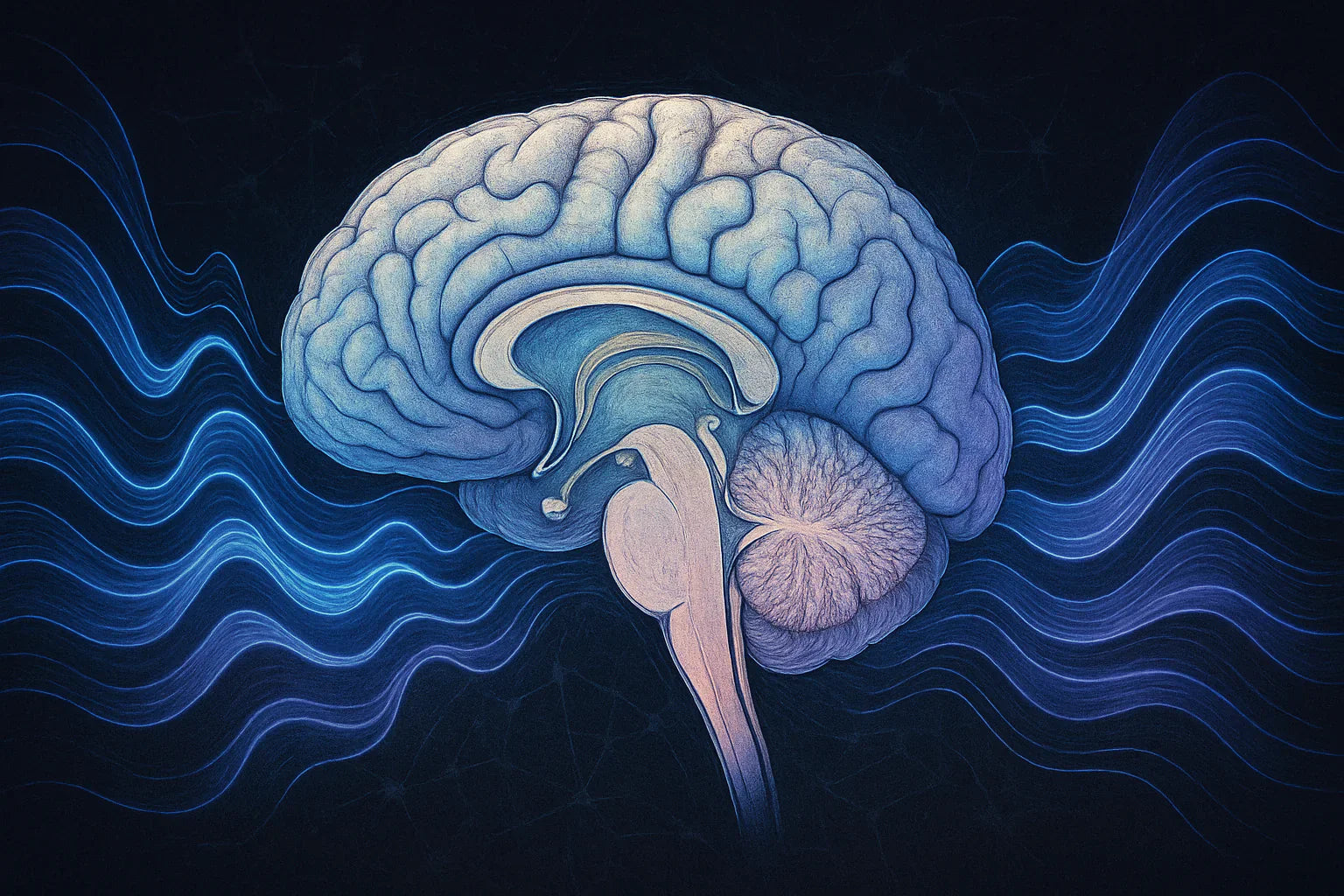
A recording of the brain's electrical activity is a graph in the form of waves of different ranges and frequencies, illustrating the transmission of messages within the nervous system while performing various activities.
All operations occur at the interface of nerve cells, i.e., in the synapses. All waves can be normal under certain conditions, and not so in others.
An excellent metaphor for brain activity can be the gears in a car, which only perform their task correctly at the appropriate speed. While learning to drive a car, we learn not only how to adjust gears to the speed, but also how to change them quickly and smoothly.
A properly functioning brain is able to quickly change wave frequency ranges depending on the activity being performed.
Brain waves are electrical waves generated in every brain. Research has shown that both the frequency of brain waves and their amplitude are not constant and depend strictly on the activity the mind is performing. They have been divided into four ranges. They were named with consecutive letters of the Greek alphabet (in the order of their discovery): ALPHA, BETA, THETA, DELTA.
Different mental states correspond to wave frequency bands typical for them:
-
Delta waves (0.5-4 Hz) are regeneration and calm during sleep. These slowest of all brain waves are responsible for the state of unconsciousness during deep sleep. They are produced in the cerebral cortex. They are the dominant wave in infants up to approx. 6 months of age (normally) and in children with learning disabilities (abnormally). It is in the Delta band that greater release of hormones responsible for body regeneration, stress reduction, and slowing down aging processes occurs. In some cases, delta waves are a pathological image characterizing brain damage (e.g., tumors). High delta accompanies attention deficit disorders.
-
Theta waves (4-8 Hz) are concentration and memory. They are said to be directly on the threshold of the subconscious. They are present for most of sleep. They are produced in the thalamus and the limbic system. These waves dominate in the EEG image from approx. 6 months to 6-7 years of age. These waves also appear during deep meditation. We then have access to all of our brain's memory.
Increasing Theta waves during meditation stimulates intuition and influences the improvement of creativity, supporting learning processes, and alleviating stress. Thomas Edison allegedly used to doze off with a metal ball in his hand while a metal plate was on the floor. When he entered a creative mental state, just before falling asleep, his muscles would relax and the ball falling onto the plate would wake him. Then he would write down all his ideas. Waves with a frequency of 7-8 Hz are observed during visualization.
The ability to control Theta is synonymous with having the ability to control physical pain. Excessive amounts of Theta are characteristic of people with attention deficit disorders. Inhibiting Theta waves is aimed at improving concentration, increasing alertness, and in the treatment of insomnia.
-
Alpha waves (8-12 Hz) are reflection, rest, relaxation, and creativity. In 90% of people, they always appear after closing their eyes. After 9-11 years of age and throughout adulthood, they are the dominant wave after closing the eyes. Elevated alpha with eyes open persists in people taking certain drugs. They are produced in the thalamus. In a low Alpha state (up to 10 Hz), our attention is focused on what is inside ourselves. We then have full access to both cerebral hemispheres, which significantly supports visualization and imagination, and we also gain access to the wealth of creativity that lies below our consciousness. In this state, we are very aware, relaxed, still, but not sleepy. This is when creative thinking works best. This is a place of deep rest, but insufficient for meditation. These waves disappear during both physical and mental effort. In a high Alpha state (11-12 Hz), we are dealing with a state of high awareness of the surroundings. This is a state during which we can react to a wide range of changes in the environment. This is a state that athletes work on the most, as thanks to it they learn quick reflexes and flawless reactions. It is a "here and now" state, i.e., optimal efficiency, which includes concentration and a kind of calm and self-confidence. Excess Alpha disrupts concentration, which impairs academic performance, while too little Alpha causes low mood and depression. With low alpha, we have lowered self-esteem and weaker motivation.
- Beta waves (above 12 Hz) are the state of consciousness and focus, and the range of these waves is the most common state of our mind. Producing Beta is associated with a state of wakefulness, alertness, external orientation, logical thinking, problem-solving, and maintaining attention. We are then conscious and focused on receiving external stimuli using our five senses: sight, hearing, touch, taste, and smell, just like now, while reading this text. In this band, we experience all emotions (joy, anger, fear, surprise, curiosity). It fosters inspiring energy and action, and is characterized by logical, analytical, intellectual thinking and verbal communication. It is produced in the brainstem and cerebral cortex. Due to the very wide range, beta waves are divided into three sub-ranges that function as separate waves having different, often opposing influences on various spheres of the human psyche: SMR (12-15Hz), Beta1 (16-18Hz), and Beta2 (18-36Hz)
Trivia: Earlier studies on alpha waves, which went almost unnoticed, were conducted by Akira Kasamatsu and Tomio Hirari. The scientists recorded the brain waves of Zen monks during deep meditation. It turned out that during meditation, monks go through four stages:
1. The appearance of alpha waves,
2. An increase in alpha wave density,
3. A decrease in wave frequency, and finally – those most skilled in the art of meditation –
4. The creation of long chains of theta waves. It is interesting that these four states accompanied the monks during training for many years. In other words – the more experience they had in meditation, the more theta waves appeared in them. Monks with over 20 years of experience produced the largest amount of theta waves. Even when there were many of them in the brain, the monks were not asleep, but were fully conscious.
Share:
Nothing harms like life, or a discourse on imbalance
Dancing feet... a few words about foot massage