

- You're right-handed and right-footed; you're right-side dominant in general - the physiotherapist said three seconds after I collapsed onto the massage table, where that rack-like contraption felt as inviting as a lounge chair by the seaside.
Yes, I am. To a fault (quite literally this time). The only thing I do with my left hand is unscrew jars. Oh, and sometimes I hold the phone to my ear with my left hand - because I'm right-handed and during that time I can engage my right hand in more precise tasks, like writing, stirring coffee, or even watering the flowers.
How did he know? Well, because the muscles on the right side of my body are definitely more developed than those on the left. At first glance - especially if looked at by a "non-physiotherapist" - it’s not obvious. But if we take a closer look, it turns out that people with muscle imbalances can sometimes be "spotted" just by assessing their posture.
Many people have a tendency toward a so-called closed posture, meaning a slight hunch and internally rotated shoulders, which is a consequence of tight chest and deltoid muscles coupled with weakened back muscles. Regardless of whether it's visible or not, the body feels it, because such a discrepancy causes muscle imbalance. This, in turn, contributes to the development of various ailments.
What exactly is muscle imbalance?
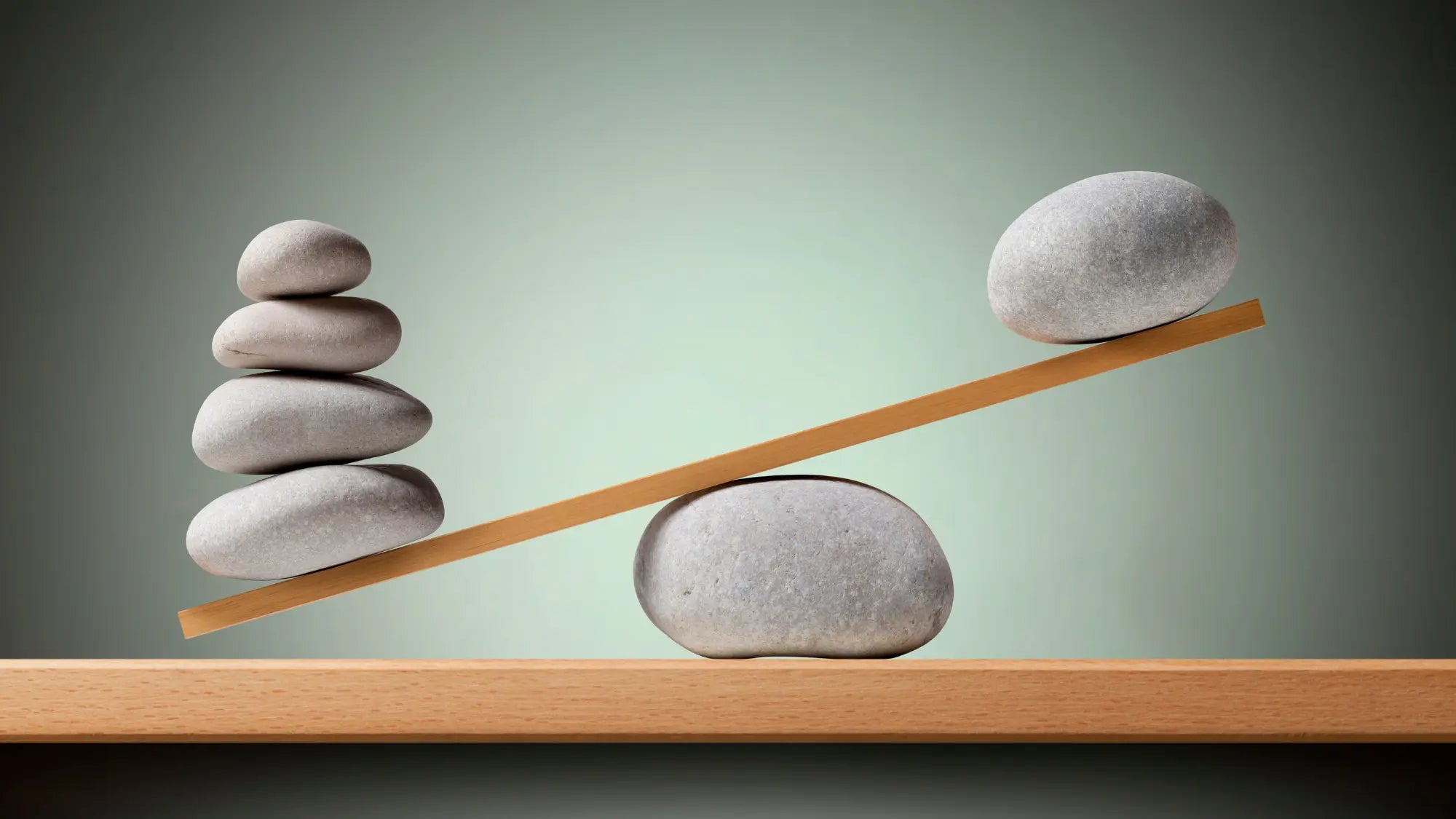
When one muscle or muscle group is significantly stronger than its antagonist (i.e., the opposing muscle), that is when we are dealing with an imbalance.
Back in the 90s, Sports Medicine magazine published an article pointing out that an athlete whose difference in hip joint muscle flexibility is greater than 15% is over 2.5 times more prone to injury.
But it's not just those who train who are at risk of injury. About 65% of all injuries, including those resulting from daily life, are caused by overuse of the musculoskeletal system.
Overuse is caused by repeating a specific movement pattern controlled by poorly balanced muscle groups. What does this mean in practice?
We perform the same activities every day and we perform them the same way, "on the same side." We work at the computer in the same - usually improper - position, we hold the phone with the same hand, or even worse - between our shoulder and ear, we carry our child on the same hip, we carry a shopping bag in the same hand, and a backpack on the same shoulder, etc.
Our right- or left-sidedness causes us to engage only one side of our body more often, and sometimes exclusively. Thus, we engage only selected muscle groups. We repeat the same pattern in sports. How many times in your life have you seen a tennis player, baseball player, or fencer change hands during a game? Certainly not even once. And most likely, they haven't thought about focusing more on their weaker hand during training - they prefer to keep working on their dominant one, because that is the one involved in holding the "tool" and operating it.
Even fans of bench pressing the barbell fall victim to their training, as they happen to omit exercises that develop the latissimus dorsi. In sports, this problem is widespread in general and occurs among athletes in almost every discipline - even cyclists.
Imbalance is associated with biomechanical changes in how the body works, yet this concept relatively rarely reaches our ears. We are more familiar with the nomenclature of the ailments that are its indirect or direct consequence. Achilles tendonitis doesn't sound that foreign anymore, does it?
How to protect yourself from imbalance? If it is not a consequence of a disease (e.g., caused by scoliosis), you should simply... find balance.
In all seriousness - the whole secret lies in keeping our muscles in a state of equilibrium. Switch hands when "on the phone," swap the mixer to the other hand when stirring batter, and sit your child on one hip and then the other. When planning a workout, check the pairs of muscle groups so that you can "provide a counter" to the exercise being performed.
Both sides of our body must be loaded evenly so that our muscles develop and strengthen symmetrically. The human body is a "network of connected vessels," and they are connected by, among other things, fascial chains; therefore, if a muscle is weakened in one place and overdeveloped and too strong in another, it will cause compensation in areas distant from the "problem" site, often a pathological compensation.
If you train, it is very important to include daily movements in your strength training, that is, to include the body parts that work the least on a daily basis in your strength training and work on them.
Another important element is muscle self-relaxation, stretching, and rolling. To effectively reduce muscle imbalance and prevent it from developing, you must remember all the above recommendations - choosing only one of these options will not solve the problem. And now, I encourage everyone to do a short analysis of their day and make corrections. Because if you don't take care of it, you'll end up on a rack, just like the author of this article...;)
Share:
Seniors on the PowerBoard!
Ride the wave - on brain waves and relaxation