

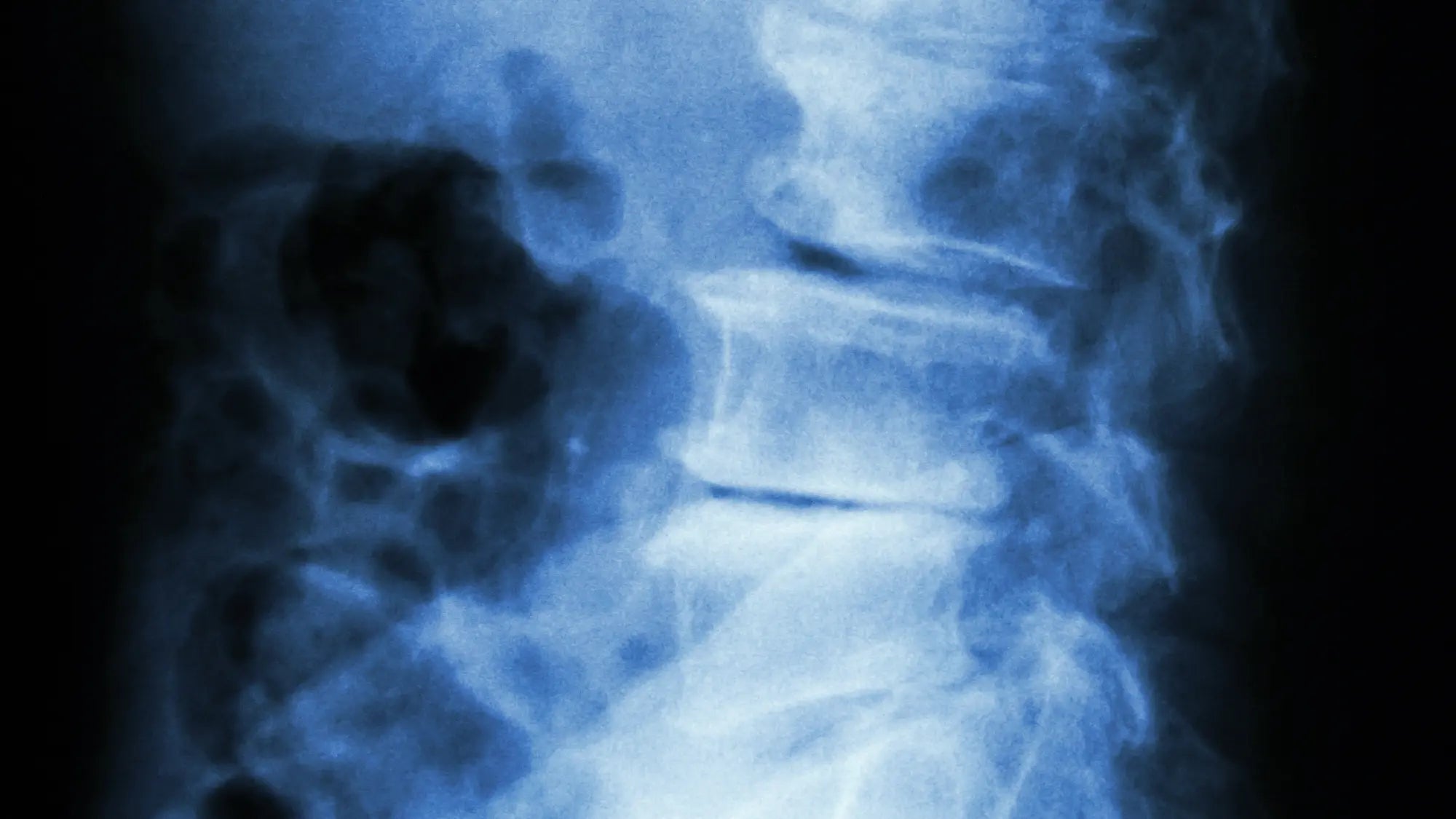
Spondylolisthesis, also known as a slipped vertebra. This condition affects approximately 5% of the population. Its symptoms develop gradually, so it is quite easy to miss them. And, of course, it is not worth missing them. Aware patients who follow contraindications and recommendations, and undergo appropriate rehabilitation, can live pain-free for many years. What is this spondylolisthesis?
What is spondylolisthesis?
Spondylolisthesis is the abnormal shifting of vertebrae relative to one another. The vertebra located above slides forward or backward relative to the vertebra located below. This is often associated with spinal instability and narrowing of the spinal canal, known as stenosis.
Spondylolisthesis occurs most frequently in the lumbar and lumbosacral region, although it sometimes appears in the cervical region - this situation occurs most often after an injury. The condition affects people of all ages.
In younger people, spondylolisthesis arises on the basis of spondylolysis, a situation in which a small part of the vertebra is damaged, leading to a break in the continuity of the bone. The vertebra becomes more mobile. The spine works seemingly normally: we load it, bend, straighten, and perform rotational movements, but it has lost a little stability because it has gained new mobility. Usually, this is the result of biological loads: other sets of vertebrae, because some people can afford more movement between vertebrae, while others cannot. It can also be associated with excessive physical activity involving bending and straightening. Spondylolisthesis can also be caused by a congenital defect of the vertebral joints and arches.
In older people, spondylolisthesis arises on the basis of degenerative disease – everything is in its place, nothing is damaged, but the elements that should participate in stabilizing the vertebrae are worn out enough that they are unable to provide this stabilization.

Types of spondylolisthesis
The classification of spondylolisthesis can be made based on various criteria, including the direction of the vertebral slip:
- Anterolisthesis – involves the slipping forward of the upper vertebra together with the section of the spine above it relative to the lower vertebra.
- Retrolisthesis – its cause is the shifting backward of a vertebra together with the section of the spine above it.
Another classification of spondylolisthesis is made based on its origin:
- Degenerative (pseudo) spondylolisthesis – this occurs most often as a result of intervertebral disc degeneration and degenerative changes in the intervertebral joints. It is most often associated with the aging processes of these structures. It is often a stable spondylolisthesis, whose primary symptoms are related to spinal canal narrowing (i.e., stenosis).
- True (isthmic) spondylolisthesis – occurs with a break in the continuity of the vertebral arch (fracture of the vertebral arch). The vertebral body, the anterior part of the arch, the transverse processes, and the superior articular processes shift, along with the section of the spine located above the level of the spondylolisthesis. This type of spondylolisthesis is often unstable, and its symptoms are mainly related to spinal instability.
- Dysplastic spondylolisthesis – its cause is a congenital, abnormal structure of the zygapophyseal joints or an abnormal shape of the vertebral arch. This type of spondylolisthesis is most commonly found in children.
What symptoms does spondylolisthesis cause?
Spondylolisthesis occurs most frequently in the lower lumbar spine and usually manifests as radiating pain, reaching from the site of the vertebral displacement down to the lower limbs. This pain intensifies when standing up and sitting down - after a moment of rest, the pain subsides.
In addition to pain (lumbar, sacral, radicular, etc.), the consequence of untreated spondylolisthesis can also include a general deterioration of physical performance, neurological disorders, and related conditions such as muscle dysfunction, sensory disturbances, and even sexual dysfunction.

Diagnosis and treatment
The first step in diagnosing the condition is an X-ray of the spine. Spondylolisthesis is very "photogenic," and this examination shows it beautifully.
The doctor evaluates the percentage ratio of the slip size to the width of the vertebra. According to the Meyerding classification, there are four degrees of displacement, although it is worth noting that the first two can be practically asymptomatic:
- I – less than 25%
- II – between 25-50%
- III – between 50-75%
- IV – over 75%
Most patients begin with conservative treatment, but its effectiveness depends on the degree of instability and the extent of spinal canal narrowing, as well as many other factors such as age, body weight, and general fitness.
The prognosis for improvement in cases of spondylolisthesis with stenosis (narrowing of the spinal canal), instability, and spondylolysis is not good. For such patients, surgical treatment is suggested. Methods of surgical treatment include pars interarticularis reconstruction, spinal fusion (spondylodesis), and vertebral repositioning and stabilization.
Spondylolisthesis - what not to do?
What should you not do if you have spondylolisthesis? In general, you should avoid lifting, carrying heavy loads, sudden bending, and hyperextension—that is, all activities that particularly stress the spine in the area affected by the spondylolisthesis. The patient should be instructed on precise "techniques" and ways to cope with, for example, lifting heavier objects by a medical specialist and therapist after a thorough diagnosis.
Rehabilitation for spondylolisthesis
The form of rehabilitation applied depends on the patient's condition and the degree of spondylolisthesis. If spondylolisthesis has been diagnosed but there are no symptoms, a physiotherapy consultation is recommended, during which the therapist selects appropriate physical exercises aimed at strengthening and stabilizing the spinal structure. The patient remains under the supervision of a specialist.
For grade 1 and 2 spondylolisthesis, if the pain intensity is low, symptoms appear periodically, and there are no concerning neurological symptoms, conservative treatment is provided.
In cases of acute pain, bed rest and painkillers are used, as well as analgesic therapies and therapies to reduce muscle tension. Sometimes a brace is necessary.
After the acute pain subsides, treatments such as mobilization and manual therapy are most commonly used to improve the flexibility and mobility of the spine, mobilizing tissues to relax trigger points, and strengthening damaged structures; kinesitherapy, i.e., exercises to strengthen and stabilize the paraspinal muscles, deep muscles, and the pelvic floor and abdominal muscles; and physiotherapy in the form of magnetotherapy, laser therapy, and ultrasound.
If you suspect you have spondylolisthesis, do not delay - be sure to see a doctor. The sooner the condition is diagnosed, the better the chances of stabilizing your spine.
Share:
Massage chairs - facts and myths
Pain during and after a massage - is it normal?