

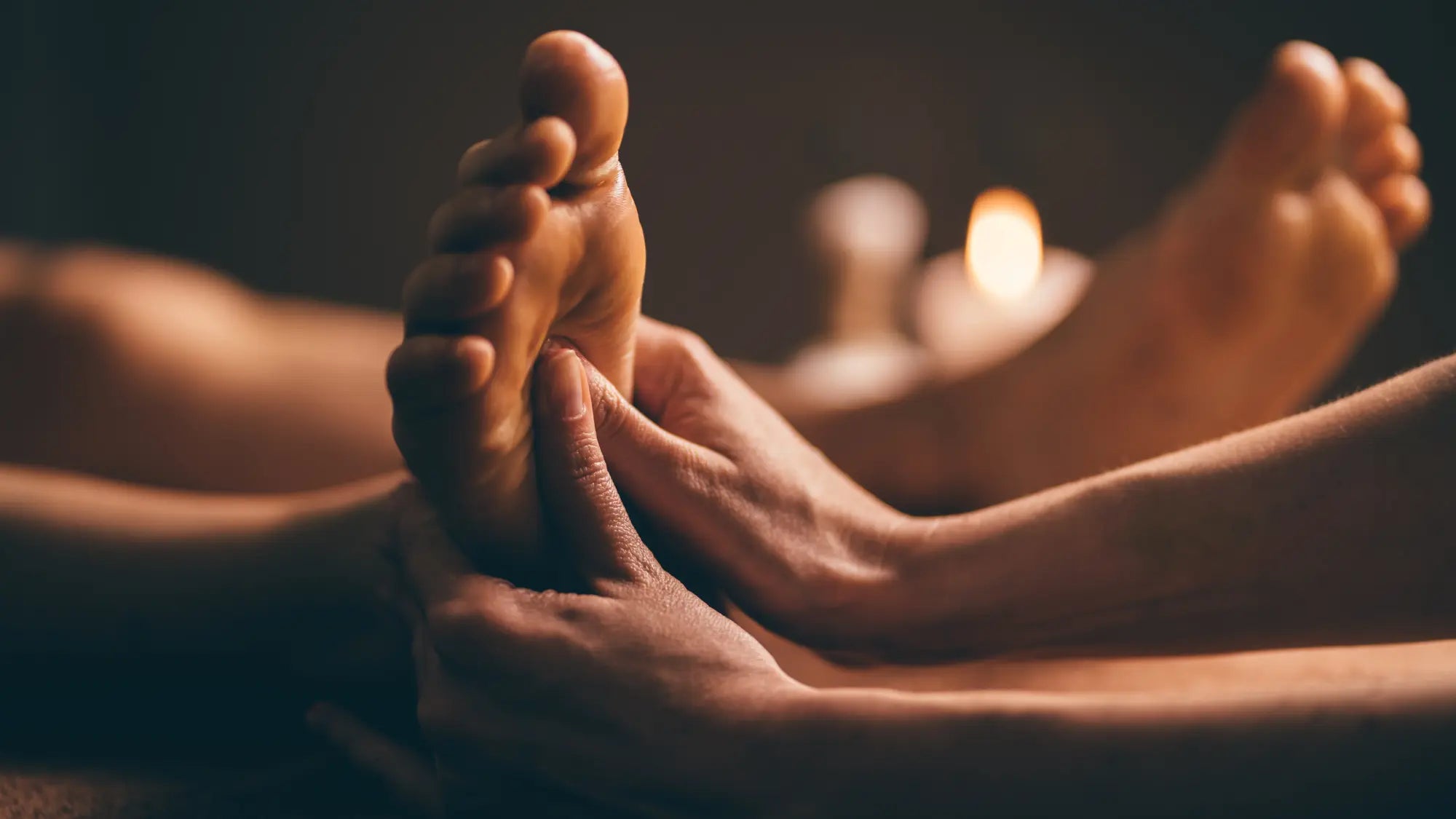
Reflexology - the wisdom of Eastern medicine
Although reflexology is classified as an alternative medicine method, this does not diminish its effectiveness. Foot reflexology is a form of acupressure, a massage that primarily involves applying pressure to specific points on the human body.
There are two parallel theories explaining what reflexology is. The first was created by Dr. William Fitzgerald and developed by Eunice Ingham, who is considered the mother of modern reflexology. According to this theory, nerves run through the human body, terminating in the toes and fingers. Each such nerve pathway is a zone. By stimulating the appropriate nerve endings in the feet, one can therefore influence distant parts of the body located within that zone.
The second theory draws from the principles of Far Eastern medicine. The Chinese, who place great importance on energy flow, believe that so-called meridians run through the human body, serving as highways for life energy (chi). If the continuity of its flow is broken, that area becomes susceptible to illness. These pathways terminate in the feet, hence the stimulation of the reflexes (receptors) located there can contribute to removing blockages and restoring proper energy circulation.
Both theories coincide with reality: on the soles of the feet, there are nerve endings for over 7,000 nerves that have a direct connection to the brain and all parts of the body. This is why the impulses triggered during a foot massage have such a wide spectrum of impact.
How does reflexology work?
When examining the receptors, a "walking" technique is used. The sensitivity, or even soreness, of a given reflex area signals that there is a problem in a specific part of the body. Does professional pressure on this area guarantee a cure?
Reflexology does not isolate a disease and does not treat it symptomatically. It does not focus solely on the organ or system causing the problem, but approaches the issue holistically, through the prism of the entire organism's functioning. It is worth noting here that this "whole" includes not only the body, but also the psyche and the spirit.
Pressure therapy on the reflex points of the feet (i.e., foot reflexology) causes physiological reactions that stimulate the body's self-healing process and help restore a physiological state of balance. The body is intended to heal itself, and reflexology merely supports this process.
When we realize the mechanism of how reflexology works, it becomes obvious that it affects all ailments – both physical and mental (stress, burnout, depression, hyperactivity, etc.). When can one expect the first effects of therapy? Sometimes a clear reaction from the body appears after the very first treatment.
It should be remembered that reflexology stimulates detoxification, so there is a possibility of experiencing symptoms such as: sweating, a feeling of heat, cold or tingling, dry throat, runny nose, increased urination, thirst, drowsiness, a tendency to laugh or cry, increased or decreased appetite, or even a short illness with cold-like symptoms.
The above symptoms should not be a cause for concern; their occurrence indicates that the body has responded to the therapy. However, if the ailments are very severe or prolonged, the number of treatments and their intensity should be reduced. The best results are achieved by using a series of 15 treatments. It is best to have them several times a week to maintain the continuity of the therapy while giving the body time to deal with the ongoing processes. A one-month break should be taken between individual series.
There is no need to prepare for the treatments in any special way – however, it is worth taking care of the condition of your feet: remove calloused skin and moisturize it. Of course, as with any treatment, there are contraindications for reflexology. It should not be used, among other things, in the case of varicose veins and venous thrombosis, during pregnancy, during infectious diseases, in the case of foot ulcers, and during acute and chronic infections accompanied by a high fever.
Map of receptors on the feet
Certainly, when starting your adventure with reflexology, you may not know which points on the foot to stimulate. A map of receptors on the feet or hands can help if you also want to perform reflex hand massage.
The image above illustrates the receptors on the feet. It is easy to notice a certain regularity here: the toes represent the head, and moving towards the heel, we go down the body through all the organs.
When performing a foot massage, you may feel discomfort in certain places. What does this mean?
The receptors on the feet represent individual organs of our body, so pain or discomfort indicates a problem in the organ represented by that area of the foot. Stimulating this area will have a harmonizing effect on the function of that organ.
The most important thing is not to act aggressively during a foot or hand massage and to remember that massage is also a time for relaxation.
If you do not know if your health condition allows for a foot reflex zone massage – consult a therapist.

Foot reflexology and massagers
To properly massage the points on your foot, you can purchase an appropriate massager. All the models below will stimulate the receptors on your feet:
A foot massage is essentially a full-body massage. It is worth doing it every day.
What are the health benefits of reflexology?
Foot reflexology is not only a relaxation method but also an effective support for physical and mental health. Regular treatments can provide relief in cases of migraines, insomnia, digestive disorders, hormonal problems, and chronic stress. By stimulating the appropriate points on the feet, reflexology supports the functioning of the nervous system, improves blood circulation, supports body detoxification, and can alleviate symptoms of emotional tension. Additionally, it can be helpful in regulating the work of the liver, kidneys, and intestines, which contributes to the overall balance of the body. As a result, reflexology is used both in prevention and as a complement to the treatment of many ailments.
Are there any contraindications for using reflexology?
Although reflexology is a safe therapeutic method, there are some contraindications to its use. It is not recommended to perform treatments on people with acute infections, fever, severe infectious diseases, open wounds on the feet, foot fungus, or on women in their first trimester of pregnancy or in cases of high-risk pregnancy. People who have undergone organ transplants, those immediately after surgery, or those with serious cardiovascular diseases should consult a doctor before starting therapy. Following these recommendations ensures the safety and effectiveness of reflexology treatments.
Share:
Electric heating pad – what does it help with?
Our clients' stories: massage chairs in rehabilitation - Paweł Wajda