

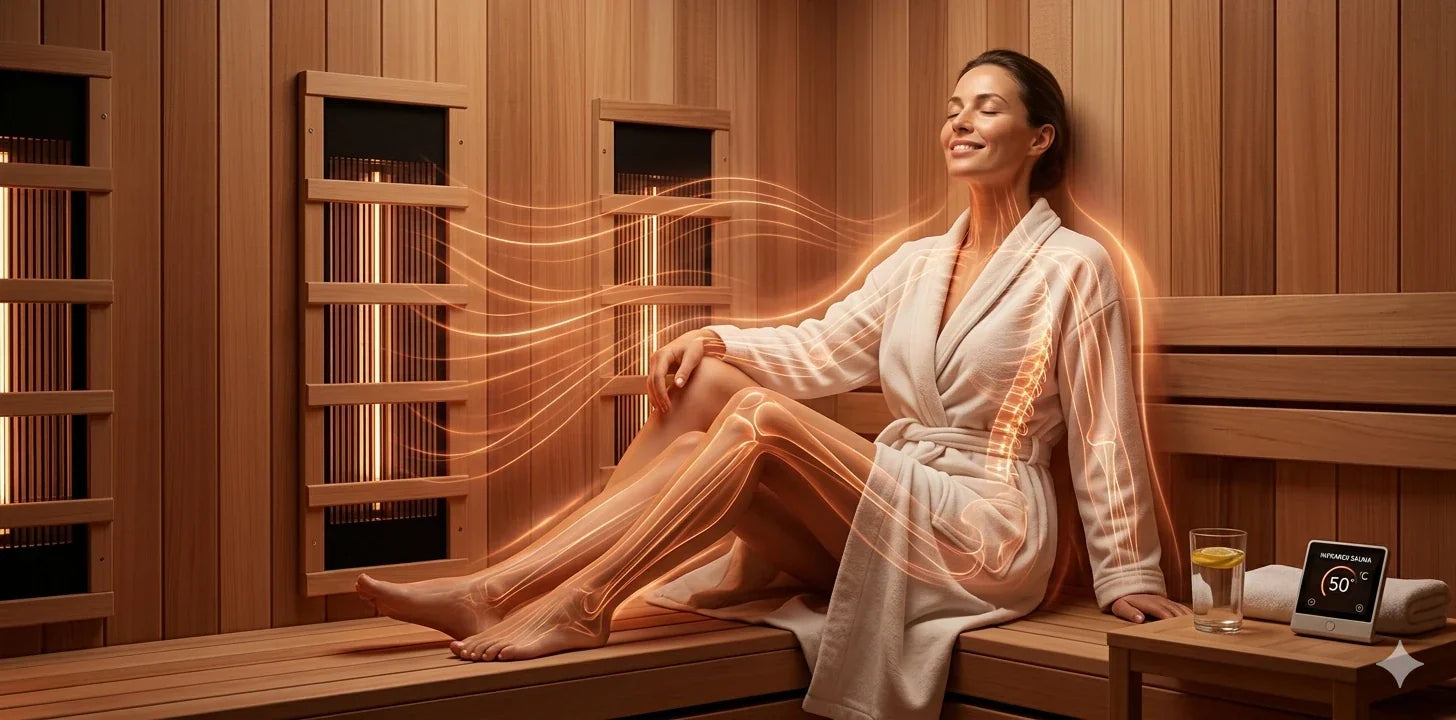
Infrared (IR) radiation is with us every day – it is emitted by the sun, our bodies, and even a fireplace. Today, thanks to precisely designed therapeutic devices and infrared saunas, we can use this natural thermal energy under controlled conditions for regeneration, treatment, and improving well-being.
What is infrared radiation?
Infrared (IR) is a type of electromagnetic radiation with a wavelength longer than visible light but shorter than radio waves. The infrared range is between 780 nm and 1 mm. The human eye cannot see it, but the skin clearly senses it – we feel it as heat.
Infrared radiation is divided into three zones, which differ in tissue penetration depth and therapeutic properties:
- NIR - Near Infrared (780 nm – 1,400 nm) - The shortest wave. Penetrates the deepest – up to 5 cm into the tissue. Stimulates cellular regeneration and collagen production.
-
MIR - Mid Infrared (1,400 nm – 3,000 nm) - Penetrates tissues up to 2 cm. Improves circulation, dilates blood vessels, and aids detoxification.
- FIR Far Infrared (3,000 nm – 1,000,000 nm) - The wave most similar to the body's own emission. Penetrates about 4–5 cm, strongly heats tissues, has a detoxifying effect.
How does infrared affect the human body?
Unlike a traditional Finnish sauna, which heats the air around the body, infrared radiation penetrates directly into the tissues, causing physiological effects without overheating the skin's surface. The mechanism of action is based on several key phenomena:
Molecular Resonance — the heart of IR therapy
Water molecules in human tissues oscillate at a frequency corresponding to far infrared (FIR). When FIR radiation hits the tissues, it causes resonance – water molecules begin to vibrate more intensely. This generates heat within the cells, stimulating cellular metabolism, without burning the skin's surface.
Thermal effect
Raising tissue temperature by 1–3°C causes vasodilation, accelerates blood and lymph flow, and increases the delivery of oxygen and nutrients to cells. This effect is similar to intense physical exertion – hence IR therapy is often referred to as "passive cardio."
Mitochondrial stimulation
NIR radiation activates chromophores – mitochondrial membrane proteins – increasing the production of ATP (adenosine triphosphate), the main "energy currency" of cells. This results in faster tissue regeneration and reduction of oxidative stress.
Infrared therapy is one of the few treatments that acts simultaneously on a cellular, metabolic, and structural level.
Infrared sauna — how does it work in practice?
An infrared sauna (also called an IR sauna) is a cabin equipped with IR emitters that radiate heat directly onto the user's body. The temperature in the cabin is usually 45–65°C – significantly lower than in a traditional Finnish sauna (80–100°C). Despite this, the intensity of sweating and health benefits are comparable or higher.
The lower air temperature makes IR saunas tolerated by people who cannot stand the heat of a traditional sauna, and a session can last longer – usually 30–45 minutes. The body sweats more profusely because the heat, penetrating deeper, stimulates sweat glands more effectively.
Health benefits of infrared therapy
Clinical studies and years of practice indicate a wide range of benefits from regular use of IR therapy:
Improved heart function and circulation
An IR sauna session accelerates heart rate to 100–150 beats per minute – an effect similar to moderate running. Regular sessions lower blood pressure and improve endothelial function.
IR heat reduces the concentration of prostaglandins – pain mediators. Effective for rheumatoid arthritis, fibromyalgia, back pain, and chronic muscle pain.
Sweat produced during an IR session contains up to 20% toxins (heavy metals, pesticides, chemicals), compared to just 3% in a traditional sauna. Supports liver and kidney cleansing.
NIR stimulates fibroblasts to produce collagen and elastin, reduces wrinkles, and improves skin tone and elasticity. Accelerates the healing of wounds, acne, and scars.
A 30-minute session can burn 200–600 kcal due to accelerated metabolism. It is not a substitute for exercise but supports weight regulation and fat tissue reduction.
IR heat activates the parasympathetic nervous system – the "rest and digest" mode. It lowers cortisol levels, improves sleep quality, and overall mental well-being.
Shortens muscle recovery time after physical exertion, reduces DOMS (delayed onset muscle soreness), and accelerates lactic acid removal. Used by elite athletes.
Artificially induced fever (hyperthermia) activates the production of heat shock proteins (HSP) and stimulates lymphocytes. Regular sessions reduce susceptibility to viral and bacterial infections.
How to use IR therapy — practical tips
To reap the maximum benefits from infrared sauna sessions, it is worth following a few rules. The recommended session length for beginners is 15–20 minutes at a temperature of 45–50°C. Experienced individuals can extend the session to 30–45 minutes. The optimal frequency is 3–4 times a week.
Hydration is key – before the session, drink at least a glass of water, and after finishing, replenish fluids and electrolytes. The skin should be clean, without creams or lotions, which can block pores and limit skin detoxification.
The best effects are achieved with a session performed after physical exercise or in the evening, as part of a night-time regenerative routine. It is not recommended to use an IR sauna immediately after a heavy meal.
Share:
Chromotherapy - the power of color for your health
How to choose a hot tub? What to look for before buying